As an Amazon Associate, I earn from qualifying purchases with no additional costs for you.
Despite Maryland being a small state, the diverse topography and complex geology offer the rockhound a variety of interesting places to uncover nice mineral and rock specimens. There are more than 100 parent rock types that determine the kinds of minerals that can be found there. ä
Most of the best rockhounding opportunities are found in the mountains of the western end of the state. The state has a wide range of physiographic provinces, stretching from the Appalachian Mountains to the Atlantic coastal plain.
These include the Appalachian Plateaus, the Ridge and Valley, the Blue Ridge Province, the Piedmont Plateau, and the Coastal Plain Province. While Maryland offers tremendous rockhounding opportunities, gem-quality crystals are unfortunately not found in the state.
One disadvantage of rockhounding in a state where there is heavy vegetation above the rock layers is that rockhounding is mostly restricted to exploring rocky outcrops and other areas of exposed rock, such as beaches and road cuts.
The Best Rockhounding Spots in Maryland Are:
| Site | Public or Private | GPS Coordinates |
|---|---|---|
| Calvert Cliffs State Park | Public | 38.395320, -76.429431 |
| Patapsco Valley State Park | Public | 39.294481, -76.785363 |
| Dollyhyde Creek | Public | 39.480353, -77.227872 |
| Soldiers Delight Natural Environment Area | Public | 39.416551, -76.831074 |
| Bear Island | Public | 38.974282, -77.202401 |
| Matoaka Beach Cabins | Private | 38.470638, -76.480229 |
| Purse State Park | Public | 38.431762, -77.256415 |
| Flag Ponds Nature Park | Public | 38.446474, -76.458600 |
| Sideling Hill | Public | 39.710012, -78.288290 |
In Maryland, you can find and collect a wide variety of nice rock and mineral specimens, including quartz, mica, feldspar, calcite, garnet, tourmaline, pyrite, siderite, limonite, hematite, hornblende, beryl, fossils, and many others.

If you are interested in checking out the best rockhounding tools you can find them by clicking here (Amazon link).
Rockhounding Regulations and Laws in Maryland
Rockhounding on federal tracts of land (those managed by the Bureau of Land Management) is allowed. As the rules regarding rockhounding on public and private lands are always changing, be sure to check with the state parks or landowners before you head out to new sites on your rockhounding adventures.
In Maryland, all public lands are off limits to collecting. Maryland state parks, natural resources management areas, historic battlefields, rail trails, and other state-managed lands do not allow collecting unless explicitly permitted. Collecting from private lands is allowed, provided the landowner grants permission to explore and collect from their land.
The Best Public Rockhounding Sites in Maryland
You can find the best rockhounding sites in Maryland that are open to the public below.
Calvert Cliffs State Park
Located in Lusby, the Calvert Cliffs State Park is a nice place to hunt for rocks and fossils. Dating to the Miocene era, when the local region was covered by a warm, shallow sea, over 600 species of fossils, including whale bone, can be found in this park. The best place to search is the beach end of the red trail, which is situated about 1.8 miles from the parking lot.
Tools such as shovels and sieves to sift the sand are permitted, but tools that can damage the environment, such as pickaxes, are not allowed. As with all beach sites, the best time to hunt is after a storm. The park is open from March through November. A day-use service charge is $5 per car and is cash only.
| Rocks / Minerals | Rarity |
|---|---|
| Chesapecten fossils | Occasional |
| Ecphora fossils | Occasional |
| Fossilised oyster shells | Common |
| Fossilised sharks teeth | Occasional |
Patapsco Valley State Park
Conveniently located in western Baltimore, the Patapsco Valley State Park is an easy-to-get-to site with a nice variety of fossils that can be found. This is a large park, encompassing 32 square miles, straddling the border of Baltimore County and Howard County. Mining and quarrying operations were important parts of the local economy, and some of the ruins of these sites can be found in the park.
The scenic park is a lovely setting to search for fossils and rocks, and has a network of trails to explore. In addition to rockhounding and fossil hunting opportunities, the park also has several waterfalls, ruins, campsites, swinging bridges, and more.
| Rocks / Minerals | Rarity |
|---|---|
| Serpentine | Common |
| Soapstone | Common |
| Fossils | Common |
Dollyhyde Creek
Running through Piedmont and other towns in the Appalachian Mountains, Dollyhyde Creek is a good place to rockhound; the meandering stream cuts through diverse terrain and exposes different layers of rock. The sedimentary stone layers that are exposed are excellent places to look for fossils and minerals.
| Rocks / Minerals | Rarity |
|---|---|
| Bornite | Occasional |
| Covellite | Occasional |
| Quartz | Common |
| Malachite | Occasional |
| Calcite | Common |
| Fossils | Common |
Soldiers Delight Natural Environment
Located in Owings Mills near Baltimore, the Soldiers Delight Natural Environment sprawls over 1,900 acres of serpentine barren. This is a good place to spend time rockhounding; the diverse rocks found here are rich in mineral diversity, many of which are not found at other sites.
In addition to being a good rockhounding place, this is a nice place to hike, with seven miles of marked trails to explore. This environment is home to rare plant and insect species, so do be careful not to disturb the environment while hunting for rocks.
| Rocks / Minerals | Rarity |
|---|---|
| Quartz | Common |
| Magnesite | Common |
| Feldspar | Common |
| Chromite | Occasional |
Bear Island
Located in the Potomac River just outside Washington DC, the the shoreline of Bear Island is a good rockhounding site and easy to get to, given its proximity to DC. Situated in the Maryland Piedmont, which has thick layers of metamorphosed sedimentary and igneous rock containing diverse mineral specimens.
The natural beauty of Bear Island makes for a tranquil and lovely setting to hunt for rocks, minerals, and fossils, as well as hike the many trails that meander through the island.
| Rocks / Minerals | Rarity |
|---|---|
| Apatite | Occasional |
| Amphibolite | Occasional |
| Fossils | Common |
| Epidote | Occasional |
| Titanite | Occasional |
| Zircon | Occasional |
Purse State Park
Situated in the Nanjemoy Wildlife Management Area, Purse State Park is a scenic place to hunt for rocks and fossils. This park sits on the eastern bank of the Potomac River, which, unlike east-facing beaches allows the rockhounder extra time in the sunlight, leaving more time in the evening to hunt for nice specimens.
Purse State Park is a popular place to spend time in nature, and the parking lots and beach can become crowded, so it would be better to plan your visit during off-hours. Shark’s teeth are one of the most collected fossils that can be found here. Fossilised ray plates (teeth) are also commonly found. In addition to teeth, fossils such as those from Turritella, a type of extinct snail.
| Rocks / Minerals | Rarity |
|---|---|
| Fossilised Shark Teeth | Common |
| Fossilised Ray Teeth | Occasional |
| Dugong Fossils | Rare |
| Turritella Fossils | Occasional |
Flag Ponds Nature Park
Fossils from animals such as sharks, whales, and crocodiles can be found in this park, as well as many other fossil types. The Flag Ponds Nature Park does charge fees for visitors. The fees are per vehicle – $5 from November through March, $5 for county residents, and $15 for non-residents in April through October.
The park is closed Tuesdays, Wednesdays, and Thursdays. Fees to enter the park are only collected on weekends. On days when the park is filled to capacity, the park will be closed to new arrivals. The park’s address is 1525 Flag Ponds Parkway, Lusby, MD 20657.
| Rocks / Minerals | Rarity |
|---|---|
| Fossils | Common |
Sideling Hill
Considered by some as one of the best places in the country to hunt for fossils, the I-68 road cut through Sideling Hill is located in the western part of Maryland. This road cut lies around six miles west of Hancock in Washington County. There are numerous layers of sedimentary rock, and almost 810 feet of it are exposed in the cut.
There is a parking lot at the now-closed Sideling Hill Visitor Center, and the walkways, observation bridge, and parking lot have remained open. Sideling Hill is an excellent place to view the stratigraphy of different rock layers.
| Rocks / Minerals | Rarity |
|---|---|
| Fossils | Common |
| Quartz | Occasional |
| Pyrite | Occasional |
Best Pay to Dig Sites for Rockhounding in Maryland
Matoaka Beach Cabins
Located just east of St. Leonard, the Matoaka Beach Cabins have a private beach on which rockhounders can find a variety of nice fossil specimens. The Matoaka Beach Cabins are open from 8 am to 8 pm with no admittance after 5 pm.
The entrance fee is $10 per person; kids aged five and under are free. The Matoaka Beach Cabins are a nice and tranquil place to hunt for fossils. Being able to camp on-site means you can take your time and enjoy the scenery while rockhounding.
| Rocks / Minerals | Rarity |
|---|---|
| Fossils | Common |
BTW: Do you want to know more about rock and mineral identification? The books listed below are the best ones you can find on the internet (Amazon links):
- Smithsonian Handbooks: Rocks & Minerals
- Gemstone & Crystal Properties (Quick Study Home)
- Ultimate Explorer Field Guide: Rocks and Minerals (National Geographic Kids)
Other Notable Rockhounding Spots in Maryland
In addition to the sites listed above, here are some more places that are good locations to look for fossils, rocks, and minerals.
Spots in Northern Maryland
Here are some additional rockhounding sites that you can find in northern Maryland.
| Site | Public / Pay | GPS Location | Common Rocks / Minerals |
|---|---|---|---|
| Cardiff outcrops | Public | 39.709565, -76.334228 | Garnet, pyrite, serpentine, chrysotile, staurolite |
| Flintville | Public | 39.697295, -76.261302 | Agate, jasper |
| Bald Friar Mine | Public | 39.704860, -76.248527 | Feldspar, garnet, mica, quartz |
| Funks Pond Recreational Area | Public | 39.670698, -76171813 | Kammererite, soapstone, serpentine, chromite, magnesite, brucite |
| Rock Springs Tailings | Public | 39.720090, -76.176323 | Kammererite, soapstone, serpentine, chromite, brucite, magnesite |
| Chrome Hill | Public | 39.627848, -76409346 | Quartz, actinolite, bronzite, chromite, serpentine, garnet |
| Reed Mine | Public | 39.611944, -76.457222 | Chromite, brucite, quartz, soapstone, serpentine |
Spots in Eastern Maryland
Here are some additional rockhounding sites that can be found in eastern Maryland.
| Site | Public / Pay | GPS Location | Common Rocks / Minerals |
|---|---|---|---|
| Ocean City Beaches | Public | 38.41746, -75.054966 | Quartz |
| Elk Mills Quarry | Public | 39.653641, -75.821163 | Garnet, beryl |
| White Marsh Pegmatites | Public | 39.388318, -76.446883 | Amethyst |
| North Ferry Point Lignite Seams | Public | 39.085660, -76.502641 | Amber, fossils |
| Sullivan Cove Lignite Seams | Public | 30.067365, -76.548179 | Amber |
| Magothy River | Public | 39.115293, -76.567007 | Pyrite |
Spots in Southern Maryland
You can find some additional places in southern Maryland to rockhound here.
| Site | Public / Pay | GPS Location | Common Rocks / Minerals |
|---|---|---|---|
| Prince George’s County gravels | Public | 38.691322, -76.7927205 | Petrified Wood |
| Bear Island | Public | 38.974028, -77.202742 | Amphibolite, sphene, epidote, apatite, zircon |
| Kensington Mica Mine | Public | 39.056860, -77.011773 | Beryl, mica |
| Beltsville Stream Gravels | Public | 39.064614, -76.928549 | Opal, quartz, petrified wood |
| Hunting Hill Quarries | Public | 39.082732, -77.220435 | Calcite, garnet, diopside, opal, serpentine |
Spots in Western Maryland
You can find some additional places in southern Maryland to rockhound here.
| Site | Public / Pay | GPS Location | Common Rocks / Minerals |
|---|---|---|---|
| Hancock quarries | Public | 39.716964, -78.195275 | Fossils, quartz |
| Ashton Quarries | Public | 39.620443, -77.868142 | Serpentine, steatite |
| Middletown gravels | Public | 39.439996, -559989 | Stibnite |
| Point of Rocks | Public | 39.275463, -77.541623 | Puddingstone |
| Frederick quarries | Public | 39.389290, -77.388262 | Fluorite |
TIP: Maryland, a state known for its diverse scenery and blue crabs, has a wide variety of collectible rocks and minerals. Check them out in the article below:
13 Common Rocks & Minerals You Can Find in Maryland
Rockhounding Clubs in Maryland
Maryland has a number of good clubs and societies for rockhounders. Some of the best are listed below.
Baltimore Mineral Society
Founded in 1951, the Baltimore Mineral Society aims to bring together people who share an interest in rocks, minerals, mineralogy, and micromounting, as well as cultivating interest in other related aspects of the earth sciences. The society holds monthly meetings that include a presentation by a guest speaker.
The society also has a monthly bulletin called ‘The Conglomerate’, which provides information about activities the club is holding as well as educational articles that club members can learn from. The society welcomes guests to its meetings, which are held in Baltimore. Their website can be found here.
Chesapeake Gem and Mineral Society
The Chesapeake Gem and Mineral Society is a non-profit organisation based in Baltimore. The society is for those who are interested in gems, minerals, fossils, and rocks. The society holds regular meetings that either include a featured speaker or an auction. The society welcomes visitors to its meetings.
There is a monthly bulletin for members providing information about club activities and educational articles. During the warmer months, field trips are arranged, and there is a mineral show held in May. The website for the society can be found here.
Southern Maryland Rock and Mineral Club
Established in 1989 for people interested in collecting rocks, minerals, and fossils, the Southern Maryland Rock and Mineral Club has become one of the largest mineral clubs in the state. The club offers its members regular meetings, presentations, and field collection trips.
The Clearwater Lapidary Club is associated with the Southern Maryland Rock and Mineral Club and provides workshop space and lapidary and jewellery-making equipment. Their website can be found here, and the website to the Southern Maryland Rock and Mineral Club can be found here.
Maryland Geological Society
The Maryland Geological Society is a non-profit, volunteer society that dedicates itself to the collection, study, and display of rocks, minerals, and fossils. The society is comprised of both amateur and professional fossil and mineral collectors.
The society offers its members regular meetings, a newsletter, field trips to local and out-of-state collecting sites, an annual rock, fossil, mineral show, and relevant publications. Visitors are welcome to attend meetings. The website to the Maryland Geological Society can be foundhere.
The Mineralogical Society of the District of Columbia
Comprised of rockhounds, mineral collectors, professional mineral scientists, and others, the Mineralogical Society of the District of Columbia was founded in 1942. The society welcomes new members from the local region and beyond.
This society offers its members collecting field trips, a monthly newsletter, volunteering at the Smithsonian Institution, and more. The website to the society can be found here.
State Gem, Mineral, Rock, and Fossil
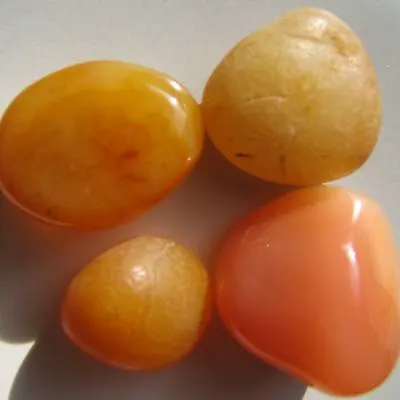

The state rock/gem/mineral of Maryland is the Patuxent River stone, a type of cryptocrystalline form of quartz, which is found only in Maryland. The colours of the rock are red and yellow, which reflect the flag of Maryland. While this stone is often described as a type of agate or fossilised dinosaur bone, it is neither. Even the official description of this stone states that the stone is agate or fossil dinosaur bone, not the quartz it truly is.


Maryland’s state fossil is Ecphora gardnerae gardnerae, a type of extinct predatory murex snail that lived in the tidal waters of the east coast of the United States about five million years ago. This brown snail takes its name from the Greek word ekphora, which means ‘protruding’. This fossil was named the state fossil in 1994. Maryland had originally named Ecphora quadricostata as the state fossil, but in 1994, it was changed to Ecphora gardnerae gardnerae, as the former was not actually found in Maryland.
Image: By The original uploader was Ecphora at English Wikipedia. Public Domain, link.
TIP: We all see those smooth, round rocks in rivers, but have you ever wondered what they’re made of and how they get so smooth? Find out in the article below:
River Rocks: This Makes Them Smooth and Round (How & Where)
Recommended Rockhounding Gear
While special gear is not required to find nice rocks and fossils, having the right tools will help you find more than what’s simply laying around on the open ground. Here are some of the more basic tools and safety gear for interested rockhounds.
Geological Hammer
This 22oz Pointed-Tip Rock Pick by Estwing (Amazon link) is recommended for its durability and shock-reducing grip.
A rock pick is essential when collecting mineral specimens from a hard substrate such as stone. The pick’s handle is shock-resistant, making it more comfortable for use for longer times in the field.
Geology Pick
The Geology pick by Estwing (Amazon link) is a good choice for those starting out in the hobby as well as seasoned professionals.
The hammer comes with a pointed tip on one side of the head and a chiseled end on the other. This pick is good for excavating interesting mineral and fossil specimens.
Mini Shovel
The Mini D-Handle Round Point Shovel by Stanley (Amazon link) pairs convenience with durability. Especially in areas of soft material such as sand or clay, it is nice to have a sturdy shovel that is easy to carry.
The D-shaped handle gives you more leverage when digging on your knees, which is something that similarly sized standard-handled shovels wouldn’t provide.
Heavy Duty Work Gloves by Ironclad
Working with your hands in rockhounding environments can be rough; it is easy to get cuts or abrasions when in the field. Protecting your hands is important, especially while working with sharp or abrasive rocks.
The Heavy Duty Work Gloves by Ironclad (Amazon link) protect your hands from sharp rocks and tools. They are machine washable, highly abrasion resistant, and durable.
Safety Glasses
Eye protection is a must when breaking up a rock or any sort of work where debris could cause injury to your eyes.
The 3M Safety Glasses (Amazon link) are anti-fog and have a corded earplug system, as well as a removable foam gasket. The clear, scratch-resistant lenses shield the eyes against harmful ultraviolet light as well as prevent eye injury from flying rock chips.
First Aid Kit
With its 299 pieces, the Only Emergency First Aid Kit (Amazon link) is a good one for rockhounds. Of course, it’s best to avoid injuring yourself but if things go wrong it’s good to be prepared.
Some of the items found in the kit include fabric and plastic bandages, painkillers, gauze and pads, cold packs, wound closers, and many more.
Conclusion
Maryland is an excellent state to rockhound in. There is tremendous variety in its landscapes, which gives the rock hunter a nice range of what can be uncovered in the state. Maryland is an excellent place to hunt for fossils, rocks, minerals, and gems, with each site offering new and exciting specimens waiting to be discovered.
If you’re new to rockhounding in Maryland, a good place to begin is by contacting the various rock and mineral societies listed above; they can be an invaluable resource for new rockhounders.
TIP: While Maryland may not be the first place that comes to mind when you hear the term ‘gold prospecting,’ it might surprise you. Find out more in the article below:
Gold Prospecting in Maryland: 7 Best Locations & Laws