
As an Amazon Associate, I earn from qualifying purchases with no additional costs for you.
Tennessee is well known for its stunning landscape, and its Smoky Mountains National Park is the most visited national park in the U.S. In addition to magnificent views, Tennessee holds many collectible rocks and minerals, including celestite, freshwater pearls, Lake Superior Agates, geodes, and epidote. Discover where to find these stones and more in this article, where we will go over the best rockhounding spots in Tennessee.
The best rockhounding spots in Tennessee are:
| Site | Public or Private | GPS Coordinates |
|---|---|---|
| Ducktown | Public | 35.037890, -84.387227 |
| Hawkins County | Public | 36.438552, -82.896419 |
| Copperhill | Public | 34.989455, -84.378313 |
| Ben Lomond Mountain | Public | 35.632493, -85.759127 |
| Wayne County | Public | 35.194450, -87.785046 |
| Tennessee River | Public | 35.110748, -85.415281 |
| Monterey | Public | 36.143092, -85.252791 |
| Livingston | Public | 36.390844, -85.330782 |
| Dale Hollow Lake | Public | 36.593736, -85.336329 |
| Buffalo Cove | Public | 36.376458, -84.997840 |
One of the reasons why Tennessee is a must-see place for rockhounds is that it has a wide range of both rocks and minerals. Some popular collectible rocks people find in this state include unakite, geode, agate, fossils, gem-quality chert, and agatized coral.
There are also plenty of minerals hidden in the Volunteer State, such as fluorite, selenite, celestite, gold, epidote, and sphalerite. While it’s tempting to dive right into the rockhounding world of Tennessee, it’s always a good idea to review the state’s rockhounding rules and regulations first.

If you want to check out the best books about rocks and minerals identification, you can find them here (Amazon link).
Rockhounding Regulations & Laws in Tennessee
As you explore the great state of Tennessee, it’s important to keep the state’s rockhounding rules and regulations in mind before collecting. Luckily, the rockhounding rules for Tennessee are simple as long as you know whether you are on public or private lands. Let’s go over the rules for each in the following sections.
If you plan to go rockhounding on private lands, you will need permission from the land’s owner or manager. Fortunately, the process for private lands is straightforward; all you have to do is notify the land’s owner or manager of your plans, receive permission, and then you are all set for your rockhounding adventure!
In the Volunteer State, rockhounding on public lands is usually legal, as long as you collect ethically and thoughtfully. For specific areas, you might need a license or permit, so it’s always best to check the rules for your specific location, especially state or national parks.
Best Rockhounding Sites in Tennessee
Whether you want to collect geodes or selenite, you’ll be able to find all the best rocks and minerals of Tennessee using these top-notch rockhounding sites. These sites are spread across the entire state, so no matter where you go in Tennessee, you’ll have the opportunity to take your rockhounding to the next level.
In case you need it, the map below shows you the exact locations for all of the best public sites mentioned below:
Ducktown
If you want to collect multiple types of minerals, Ducktown is the place to be in Tennessee! Ducktown is rich in minerals, and there are plenty of mines in the area as well, such as the Burra Burra Mine, which extracted over 15 million tons of copper ore during its operation. In addition to copper, rockhounds often collect garnet, gold, malachite, azurite, staurolite, galena, and pyrite from this area.
There are two main routes in and out of Ducktown. You take the TN-68 or Highway 74 to reach this area, which is located in Polk County.
| Rocks & Minerals | Rarity |
|---|---|
| Copper | Common |
| Garnet | Common |
| Gold | Rare |
| Malachite | Occasional |
| Azurite | Occasional |
| Staurolite | Occasional |
| Galena | Common |
| Pyrite | Common |
Hawkins County
Hawkins County is located right next to the Virginia/Tennessee border, and there are plenty of mines and quarries for rockhounds to explore. Rockhounds often bring home jasper, agate, celestite, fluorite, and calcite. On occasion, rockhounds discover golden jasper in this area, which makes a great addition to any rockhound’s collection.
Hawkins County covers a large area, but fortunately, it’s located right beside Interstate 81 and Interstate 26, and there are many routes available to reach this place with ease.
| Rocks & Mineral | Rarity |
|---|---|
| Jasper | Common |
| Agate | Common |
| Celestite | Occasional |
| Fluorite | Occasional |
| Calcite | Common |
Copperhill
Located a bit south of Ducktown, Copperhill is pressed against the border of Georgia/Tennessee. One of the reasons Copperhill is such a great spot for rockhounding is that it has the Ocoee River and many creeks that bring in all kinds of treasures. Check the gravels and waterways of this area to find gold, garnet, azurite, pyrite, malachite, cuprite, staurolite, and galena.
If you start your rockhounding journey in Ducktown, you can easily reach Copperhill by taking the TN-68 down south.
| Rocks & Minerals | Rarity |
|---|---|
| Gold | Rare |
| Garnet | Common |
| Azurite | Occasional |
| Pyrite | Common |
| Malachite | Occasional |
| Cuprite | Common |
| Staurolite | Occasional |
| Galena | Common |
BTW: Do you want to know more about rock and mineral identification? The books listed below are the best ones you can find on the internet (Amazon links):
- Smithsonian Handbooks: Rocks & Minerals
- Gemstone & Crystal Properties (Quick Study Home)
- Ultimate Explorer Field Guide: Rocks and Minerals (National Geographic Kids)
Ben Lomond Mountain
The Ben Lomond Mountain, particularly the west side, is a frequent stomping ground for Tennessee rockhounds. At this mountain, you can collect geodes, dolomite, calcite, celestite, marcasite, and pyrite.
Ben Lomond Mountain is located next to Smyrna, and you can use Shellsford Road or Beersheba Highway to reach this destination.
| Rocks & Minerals | Rarity |
|---|---|
| Azurite | Common |
| Quartz | Common |
| Malachite | Common |
| Barite | Common |
| Anglesite | Common |
Wayne County
All throughout Wayne County, you will come across limestone exposures that contain all sorts of treasures. Specifically, the limestone often contains agatized fossils, quartz crystals, and even gem-quality chert.
Highway 64 and TN-13 both cut straight through Wayne County, so they will take you wherever you need to go in this area.
| Rocks & Minerals | Rarity |
|---|---|
| Agatized fossils | Occasional |
| Quartz | Occasional |
| Chert | Occasional |
Tennessee River
Did you know that Tennessee is the only place in the United States that has a freshwater pearl farm? Since the 1980s, this pearl farm has produced many types and colors of pearls from Birdsong Creek. If you want to collect some famous Tennessee freshwater pearls, take a trip to the Tennessee River.
In addition to the Tennessee River, rockhounds also have luck finding pearls in Kentucky Lake, which flows from Tennessee to Kentucky.
| Rocks & Minerals | Rarity |
|---|---|
| Freshwater pearls | Common |
Monterey
Crystal-lovers will be happy to know that they can collect all sorts of shiny crystals in Monterey, including quartz, celestite, dolomite, fluorite, and calcite. As a matter of fact, this area is one of the best places in the state to find quartz due to its abundance and excellent quality.
There are four main routes into Monterey: Interstate 40, Clarkrange Highway, Hanging Limo Highway, or TN-84. All of these routes lead into the heart of Monterey, so you won’t need to take any detours to reach this area.
| Rocks & Minerals | Rarity |
|---|---|
| Quartz | Common |
| Celestite | Common |
| Dolomite | Common |
| Fluorite | Common |
| Calcite | Common |
Livingston
When you visit Livingston, check out the mine dumps to find geodes, calcite, celestite, dolomite, and pyrite. In the past, this area was known for its coal and iron mining; however, the majority of the mines have been closed for decades.
Livingston isn’t a large area, and there are multiple routes leading in and out of town. The two that go straight through this area are E Main Street and N Church Street.
| Rocks & Minerals | Rarity |
|---|---|
| Geode | Occasional |
| Calcite | Common |
| Celestite | Occasional |
| Dolomite | Common |
| Pyrite | Common |
Dale Hollow Lake
Dale Hollow Lake is a large body of water, extending past the Tennessee border and into Kentucky. The majority of the lake is located in Tennessee, and there are numerous shores where rockhounds can find fossils. These fossils are typically of marine life, such as crinoids and coral, but some rockhounds also come across geodes and chert in this area.
| Rocks & Minerals | Rarity |
|---|---|
| Fossils | Common |
| Geode | Occasional |
| Chert | Occasional |
Buffalo Cove
The Buffalo Cove area has plenty of quarries, creeks, and gravel beds that are excellent spots for rockhounding. As you explore this location, keep a lookout for geodes, pyrite, calcite, celestite, and dolomite.
If you want to explore Buffalo Cove or Buffalo Creek, take Glenobey Road, a route that intersects with the creek.
| Rocks & Minerals | Rarity |
|---|---|
| Geode | Occasional |
| Pyrite | Common |
| Calcite | Common |
| Celestite | Occasional |
| Dolomite | Common |
Other Notable Rockhounding Spots in Tennessee
Even though we covered many rockhounding sites, Tennessee is a large state, and there are a few more rockhounding locations that deserve an honorable mention.
| Site | Public or Private | GPS Coordinates | Common Rocks/Minerals |
|---|---|---|---|
| Sugar Creek | Public | 35.807081, -88.886050 | Agatized coral |
| Roan Mountain | Public | 36.196899, -82.078946 | Unakite |
| Montvale Springs | Public | 35.644052, -83.958399 | Gold |
| Townsend | Public | 35.673920, -83.753815 | Epidote |
| Horse Mountain | Public | 35.512011, -86.420252 | Agate (Horse Mountain Agate) |
| Straight Creek Mines | Private | 36.389156, -83.642566 | Sphalerite, galena |
TIP: Tennessee is one of the most biodiverse inland states in the U.S.. Check out the most common rocks and minerals in the article below:
13 Common Rocks & Minerals You Can Find in Tennessee
Rockhounding Clubs in Tennessee
Whether you are searching for a statewide or local group to share your passion for rockhounding with, Tennessee has you covered with its many rockhounding clubs and organizations.
Knoxville Gem & Mineral Society
If you’re in the Knoxville area, check out the Knoxville Gem & Mineral Society (KGMS). The KGMS is a non-profit family-oriented group for people who “share an interest in studying, collecting, and sharing rocks, minerals, and fossils.”
They hold meetings on the third Thursday of each month at 7:30 pm, except for months that have other special events, such as shows or banquets. This group emphasizes that it welcomes rockhounds of all ages and skill levels, creating an inclusive environment for everyone to share their passion for rockhounding.
Memphis Archeological and Geological Society
The Memphis Archaeological and Geological Society, also known as MAGS, welcomes all adult and youth visitors to their meetings. They often hold field trips for members, and these field trips often have a special focus on fossils. This organization has been in operation since 1958 and continues to promote archeology and geology in the community today.
Mid-Tennessee Gem & Mineral Society
According to their website, the Mid-Tennessee Gem & Mineral Society is “a non-profit 501(c)(3) educational society dedicated to the study and enjoyment of the earth sciences.” They host meetings, field trips, gem and mineral shows, and lapidary or associated classes. They are also active in promoting rockhounding in the community, offering scholarships for students invested in Geology/Earth Sciences.
State Rock, Mineral, Gem, and Fossil of Tennessee
Not all states have a state rock, mineral, gem, and fossil, but Tennessee has all four! Let’s go over these important state geological symbols below.
State Rock

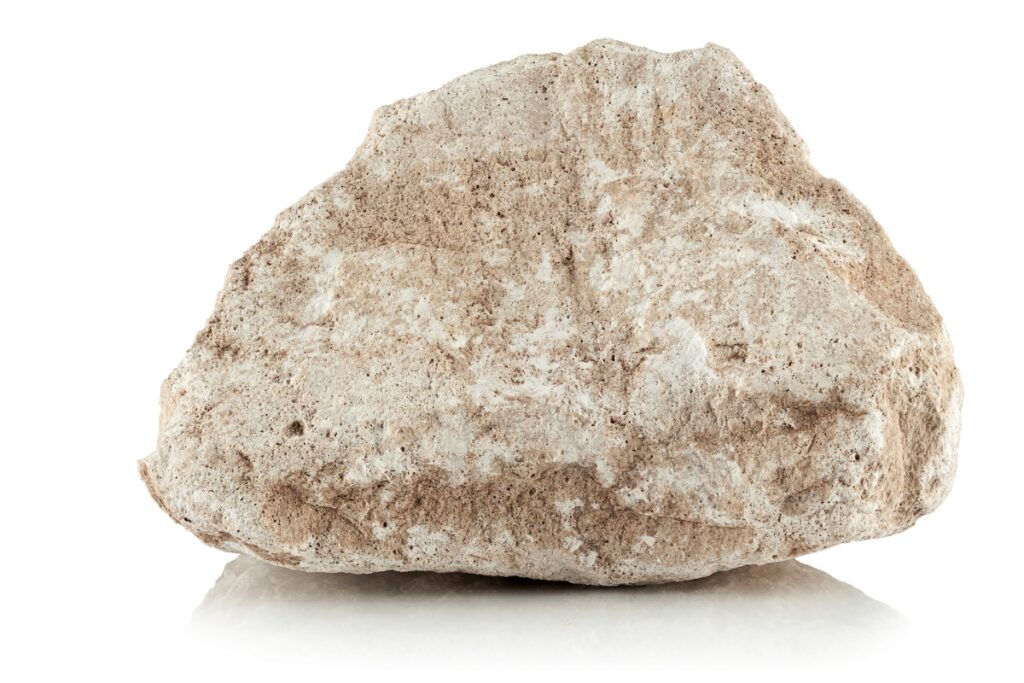
In 1979, Tennessee designated limestone as its state rock. While Tennessee limestone might not be very famous, Tennessee marble, which is the limestone that has undergone metamorphic change, is often chosen for architectural purposes. During your travels in this state, you’ll probably be able to see the Tennessee marble incorporated into the floors, interiors, and exteriors of Tennessee buildings.
State Fossil


The state fossil of Tennessee is the Pterotrigonia (Scabrotrigonia) Thoracica, but this long name is often shortened to just “Ptero.” This bivalve was nominated as the state fossil in 1998, and they are extremely common throughout the state. These small creatures lived around 70 million years ago during the Cretaceous Era, and similar bivalves are still alive and living in Tennessee’s rivers today.
Source of image: https://netstate.com/states/symb/fossils/tn_pterotrigonia_thoracica.htm
State Gem


Tennessee’s river pearl is one of the most popular treasures from this state, so it makes sense that it was designated the state gem in 1979. These pearls are stunning, coming in multiple shapes, sizes, and colors, and they are famous not just in the U.S. but worldwide. Locals often use these pearls to create jewelry and other decorative items.
State Mineral


Originally, agate was designated the official state stone in 1969, but then Tennessee decided to change its title to the state mineral in 2009. Interestingly, agate isn’t particularly common in this state, but the specimens they do find are lovely and would make great additions to any collection.
Recommended Rockhounding Gear
While special gear is not required to find nice rocks and fossils, having the right tools will help you find more than what’s simply laying around on the open ground. Here are some of the more basic tools and safety gear for interested rockhounds.
Geological Hammer
This 22oz Pointed-Tip Rock Pick by Estwing (Amazon link) is recommended for its durability and shock-reducing grip.
A rock pick is essential when collecting mineral specimens from a hard substrate such as stone. The pick’s handle is shock-resistant, making it more comfortable for use for longer times in the field.
Geology Pick
The Geology pick by Estwing (Amazon link) is a good choice for those starting out in the hobby as well as seasoned professionals.
The hammer comes with a pointed tip on one side of the head and a chiseled end on the other. This pick is good for excavating interesting mineral and fossil specimens.
Mini Shovel
The Mini D-Handle Round Point Shovel by Stanley (Amazon link) pairs convenience with durability. Especially in areas of soft material such as sand or clay, it is nice to have a sturdy shovel that is easy to carry.
The D-shaped handle gives you more leverage when digging on your knees, which is something that similarly sized standard-handled shovels wouldn’t provide.
Heavy Duty Work Gloves by Ironclad
Working with your hands in rockhounding environments can be rough; it is easy to get cuts or abrasions when in the field. Protecting your hands is important, especially while working with sharp or abrasive rocks.
The Heavy Duty Work Gloves by Ironclad (Amazon link) protect your hands from sharp rocks and tools. They are machine washable, highly abrasion resistant, and durable.
Safety Glasses
Eye protection is a must when breaking up a rock or any sort of work where debris could cause injury to your eyes.
The 3M Safety Glasses (Amazon link) are anti-fog and have a corded earplug system, as well as a removable foam gasket. The clear, scratch-resistant lenses shield the eyes against harmful ultraviolet light as well as prevent eye injury from flying rock chips.
First Aid Kit
With its 299 pieces, the Only Emergency First Aid Kit (Amazon link) is a good one for rockhounds. Of course, it’s best to avoid injuring yourself but if things go wrong it’s good to be prepared.
Some of the items found in the kit include fabric and plastic bandages, painkillers, gauze and pads, cold packs, wound closers, and many more.
Conclusion
For your next rockhounding adventure, plan a trip to Tennessee, where you’ll have ample opportunity to gather some famous river pearls, dig for agatized fossils, or bring home some sparkling celestite. From the mountains to the rivers, the lands of this state are packed with collectible rocks, minerals, gems, and fossils.
Additionally, suppose you would like some company as you go on your rockhounding excursions. In that case, you’ll find that all the rockhounding clubs and groups in the area are welcoming and love to share their passion with other enthusiasts. So, now that you have all the information, it’s time to get ready, pack your bags, and head on over to Tennessee to start your next rockhounding adventure!
TIP: Check out the article below if you are interested in the complete guide on gold prospecting in Tennessee:
Gold Prospecting in Tennessee: 7 Best Locations & Laws