As an Amazon Associate, I earn from qualifying purchases with no additional costs for you.


Emerald is the green variety of beryl (Be₃Al₂(SiO₃)₆), colored by trace chromium and/or vanadium, rated 7.5-8 on the Mohs hardness scale. It forms only where beryllium-rich rock meets chromium- or vanadium-bearing rock — two chemistries that rarely occur near each other, which is why gem-quality emerald is so rare worldwide.
Price: a small oiled emerald can run $30-100 per carat; fine, untreated Colombian material can reach $10,000+ per carat, with exceptional stones selling for substantially more.
Best U.S. states: North Carolina, California, South Carolina, and Massachusetts — check pegmatite veins and mica schist outcrops. Quick ID check: natural emerald often feels cool to the touch due to its thermal properties, shows natural inclusions (the “jardin”) under a loupe, and has an uneven fracture rather than the shell-like fracture of glass fakes.
How Emerald Forms
Emerald needs two ingredients that rarely occur near each other: beryllium, concentrated in silica-rich rocks like granite and pegmatites, and chromium or vanadium, found almost exclusively in ultramafic and mafic rocks like basalt and peridotite. As GIA’s geology review of emerald deposits explains, gem-quality emerald only forms where these two rock families meet directly.
- Hydrothermal type — beryllium-rich fluids move along fault and shear zones into chromium-rich rock (the classic Colombian deposits)
- Pegmatite type — beryllium-rich pegmatites intrude directly into mafic or ultramafic rock, as seen in many African and Brazilian deposits
Either way, emerald typically crystallizes in metamorphic rock reshaped by heat and pressure over millions of years, according to the Accredited Gemologists Association. That is why it forms so differently from most other gemstones, which crystallize in ordinary igneous rock.
This unusual, two-ingredient origin explains almost everything else about the stone: its heavy internal fracturing (nicknamed the “jardin,” French for garden), and its rarity next to other beryl varieties like aquamarine. Two stones from the very same mine can differ dramatically in quality depending on exactly where the fluids met.
How to Identify Real Emerald (vs. Fake)
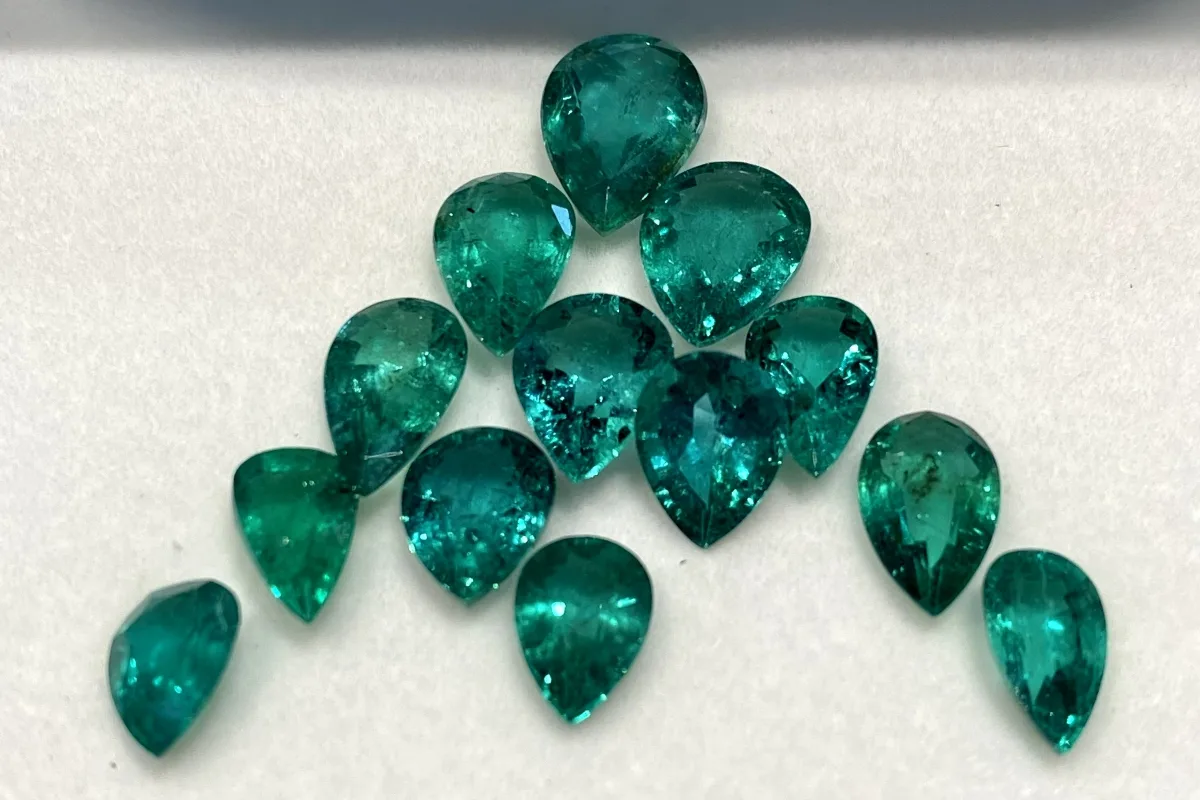

Because natural emerald is so valuable, it’s one of the most commonly faked gemstones — via glass, lab-grown emerald, and doublets assembled from cheaper materials. A genuine emerald has a distinct hexagonal prism crystal habit and several other checkable tells.
- Bluish-green to green color, more saturated than aquamarine or other green stones
- Visible natural inclusions (the “jardin”) under a 10x loupe — glass fakes are often unnaturally clean, or full of round gas bubbles
- Cold to the touch and slow to warm in your hand, unlike glass
- Uneven fracture, not the conchoidal (shell-like) fracture typical of glass and quartz imitations
- Under UV light, inert to a weak orangy-red — some chromium-doped synthetics fluoresce a vivid red instead. Fluorescence varies significantly between diffrent types of emeralds.
- Watch for foiled backings or a seam line — signs of an assembled stone (doublet/triplet)
BTW: If you are looking for the best UV light for rockhounding, find out my picks below (Amazon links):
- BEST OPTION: Convoy 8+ 365nm UV LED Flashlight with Patented Glass Filter
- BUDGET OPTION: Karrong Rechargeable 1200 Lumen 395nm UV Flashlight
- OPTION FOR INDOOR USAGE: Prime Upgraded Big Chip 396nm UV
None of these checks alone is definitive. A jeweler or gem lab test — refractive index, specific gravity, and inclusion analysis — is the only way to be fully certain. The table below summarizes the full comparison:
| Characteristic property | Real emerald | Fake emerald |
|---|---|---|
| Color | It commonly has numerous inclusions and fractures. | Light-green, yellowish-green. |
| Clarity | Translucent to transparent. | Either perfectly transparent or, vice versa, opaque. |
| The presence of inclusions | Commonly has numerous inclusions and fractures. | It commonly has numerous inclusions and fractures. |
| The form of raw chrystals | Elongated hexagonal prism. | Any other non-hexagonal shapes. |
| Type of fracture | Uneven. | Conchoidal or shell-like fracture in the case of glass fakes or quartz imitations. |
| The presence of gas bubbles | None. | It can be present in glass fakes and synthetic emeralds. |
| The presence of opaque metal inclusions | None. | It can be present in synthetic emeralds. |
| Growth patterns | Sometimes oscillatory zoning is present. | Foiled, chevron-like growth patterns. |
| Touch test | Cold to the touch. | Some fakes can be warm to the touch. |
| The facet junctions | Sharp. | Rounded facet junctions. |
| The UV light test | From inert to orangy-red. | Cr-doped synthetic emeralds glow vibrant red under the UV. |
If several checks point the same direction, you likely have your answer. For any purchase of real value, always ask for independent gemological certification first.


BTW: Do you want to know more about rock and mineral identification? The books listed below are the best ones you can find on the internet (Amazon links):
- Smithsonian Handbooks: Rocks & Minerals
- Gemstone & Crystal Properties (Quick Study Home)
- Ultimate Explorer Field Guide: Rocks and Minerals (National Geographic Kids)
What Determines Emerald’s Value


Emerald pricing swings more than most gemstones because several factors stack on top of each other. The main drivers are:
- Color saturation and hue — a vivid, bluish-green commands the highest prices
- Clarity — the degree of visible “jardin” inclusions, graded by eye rather than loupe
- Cut and carat weight — the “emerald cut” was designed specifically to protect this brittle stone while faceting
- Origin — Colombian stones traditionally carry a premium over African or Brazilian material of similar quality
- Treatment status — untreated (unoiled) stones sell for significantly more than standard oil-treated material
- Rare optical effects — a trapiche pattern or a cat’s-eye (chatoyant) effect can add a significant premium


Because so many variables stack together, the same rough stone can be cut into finished gems worth wildly different amounts. The tables below give a general price range by unit and by color — treat them as a reference, not an appraisal.
| Weight units | Emerald price for faceted gemstones |
|---|---|
| per carat (ct) | $30 – $1,000** |
| per gram (g) | $150 – $2,500* |
| per ounce (oz) | $4,251 – $70,000* |
| per pound (Ib) | $67,950 – $1,132,500* |
| per kilo (kg) | $150,000 – $2,500,000* |
Price scales non-linearly with size: larger, flawless emeralds are disproportionately rarer, so price per carat climbs sharply as carat weight increases.
| Color/phenomenon of emerald | Price range per carat |
|---|---|
| Bluish-green to green | $60 – $10,000 |
| Yellowish-green | $40 – $6,000 |
| Pale-green | $30 – $500 |
| Trapiche emerald | $40 – $1,800 |
| Cat’s eye emerald | $150 – $2,000 |
For an accurate valuation of a specific stone, a certified appraisal from a gemologist is the only reliable option. Online price tables can only ever be a rough guide.
Where to Find Emerald in the US
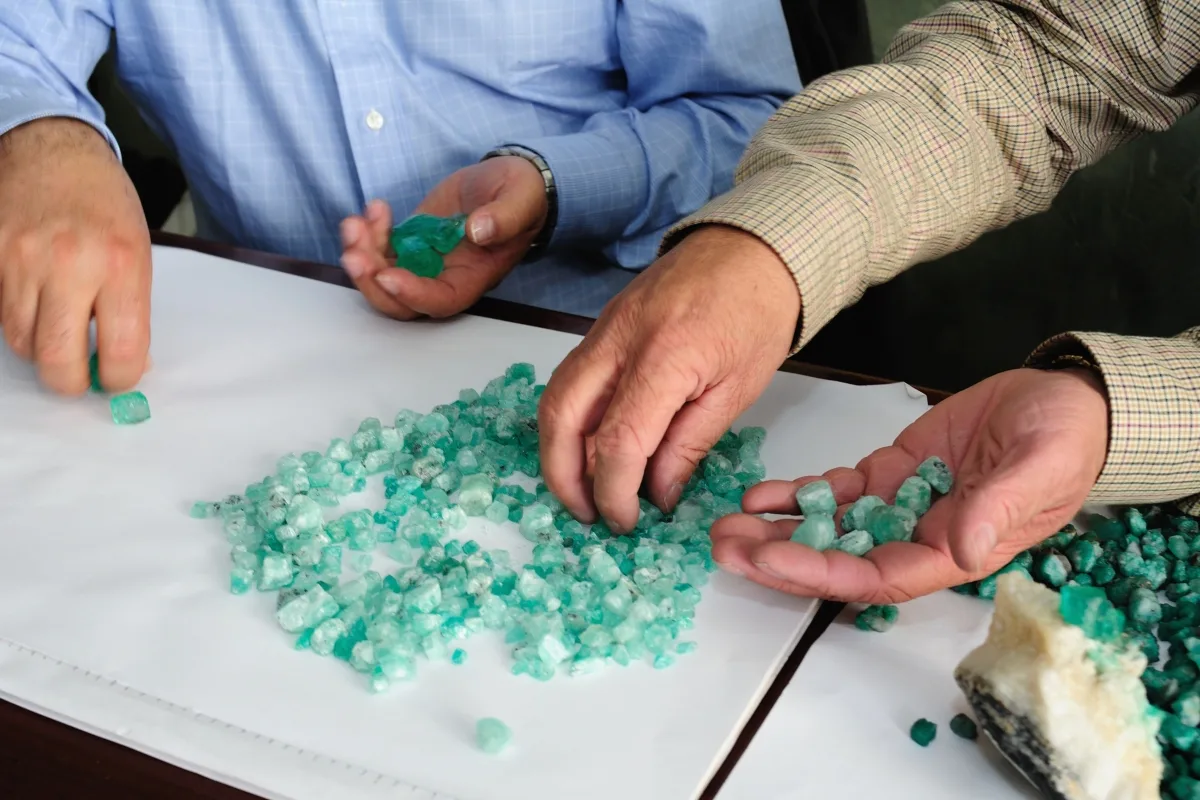
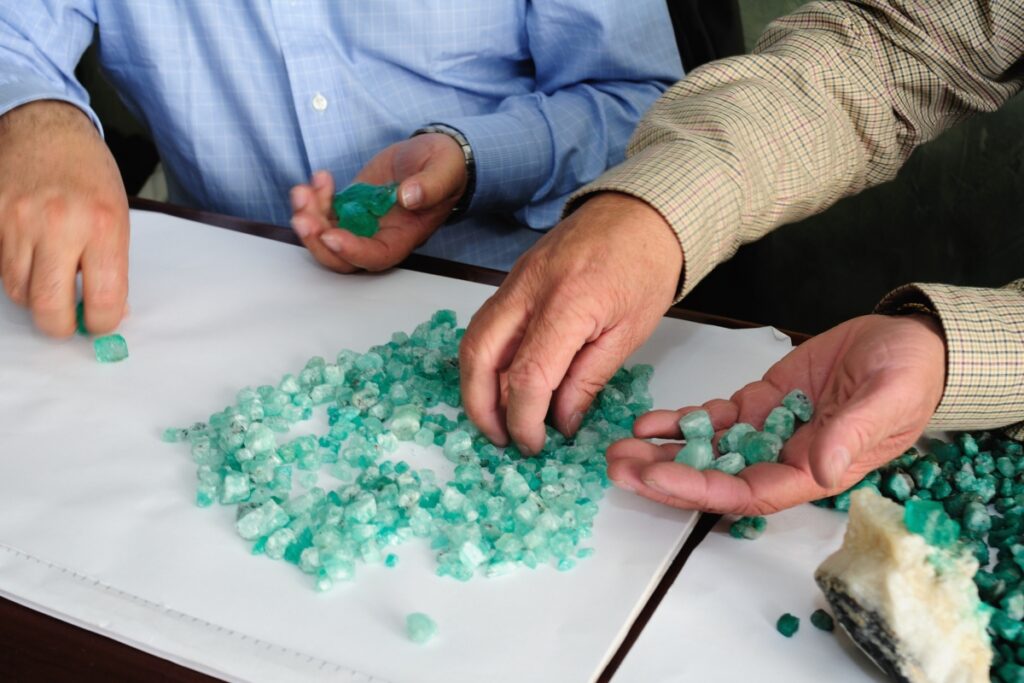
North Carolina is by far the most productive emerald-producing state in the United States. Other gem-quality emerald deposits are rare in the United States, but a handful of localities are well documented on Mindat’s list of U.S. emerald localities. Most are open to rockhounds, either as fee-dig mines or public land — always confirm current local rockhounding rules before you dig.
- North Carolina — the most productive U.S. state; Emerald Hollow Mine and Elijah Mountain Gem Mine offer fee-dig access, with wild finds also reported near Burnsville and Crabtree Emerald Mine
- California — San Diego County, Julian, and Trinity County pegmatite districts
- South Carolina — Bowens River, Anderson County, and Cherokee County
- Massachusetts — the historic Lily Pond locality
The full state-by-state breakdown, including specific mine names, is below:
| State | Locations |
|---|---|
| North Carolina | Emerald Hollow Mine, Elijah Mountain Gem Mine, Burnsville, Crabtree Emerald Mine |
| California | San Diego County, Julian, Trinity County |
| South Carolina | Bowens River, Anderson County, Cherokee County |
| Massachusets | Lily Pond |
Fee-dig mines are the most reliable way to find emerald yourself without specialized geology knowledge. They maintain productive ground and typically guarantee at least some finds for a set entry fee.
Recommendation box: All tools and equipment you need for rockhounding and rock identification* (Amazon links):
1. Estwing Rock Hammer – Light, comfortable, and extremely durable hammer.
2. Estwing Geologist Pick – Classic and the most trusted paleo pick in the world.
3. Finder 12-inch Chisels – Heavy-duty chisels set with hand protection.
4. Mini Handle Shovel – This is a great tool for digging deep in the dirt.
5 Ironclad Utility Work Gloves – Breathable, but they also protect the areas requiring them most.
6. 3M Safety Glasses – Comfortable and efficient goggles for rockhounding.
7. Convoy 8+ UV Light – 365nm UV LED flashlight with a patented glass filter.
8. Wesley’s Jewelers Loupe – High magnification options (30X and 60X) with carrying case.
9. Mohs Hardness Kit – A specially designed kit for rockhounds
*All recommended products are personally tested and regularly used by experts from this website.


Where the World’s Best Emeralds Come From
While emeralds have been found on every inhabited continent, only a handful of regions consistently produce stones prized by collectors and the jewelry trade. The differences come down to geology: each deposit forms under slightly different conditions, resulting in distinct color, clarity, and crystal characteristics.
- Colombia — widely regarded as the world’s premier emerald source. Colombian deposits, including the famous Muzo, Chivor, and Coscuez mining districts, produce intensely saturated green stones with exceptional transparency. The country’s unique hydrothermal deposits are responsible for many of the finest emeralds ever discovered, which is why Colombian origin often commands a premium in the gem market.
- Zambia — known for producing emeralds with a slightly bluish-green color and excellent clarity. Zambian stones are often less fractured than their Colombian counterparts and have become increasingly popular as a high-quality alternative in the international jewelry trade.
- Brazil — one of the world’s largest emerald producers by volume. Brazilian deposits yield a wide range of material, from affordable commercial-grade stones to fine gems suitable for high-end jewelry. Many of the large emerald crystals displayed in museums and mineral collections originated in Brazil.
- Afghanistan — the Panjshir Valley produces emeralds that are frequently compared to top Colombian material for their vivid color and transparency. Although production is relatively limited, fine Afghan emeralds are highly sought after by collectors and gem dealers.
Origin alone does not determine value. A fine emerald from Zambia or Afghanistan can be worth far more than an average Colombian stone. However, when all other quality factors are equal, Colombian emeralds generally remain the benchmark against which other emeralds are judged.
FAQ About Emerald
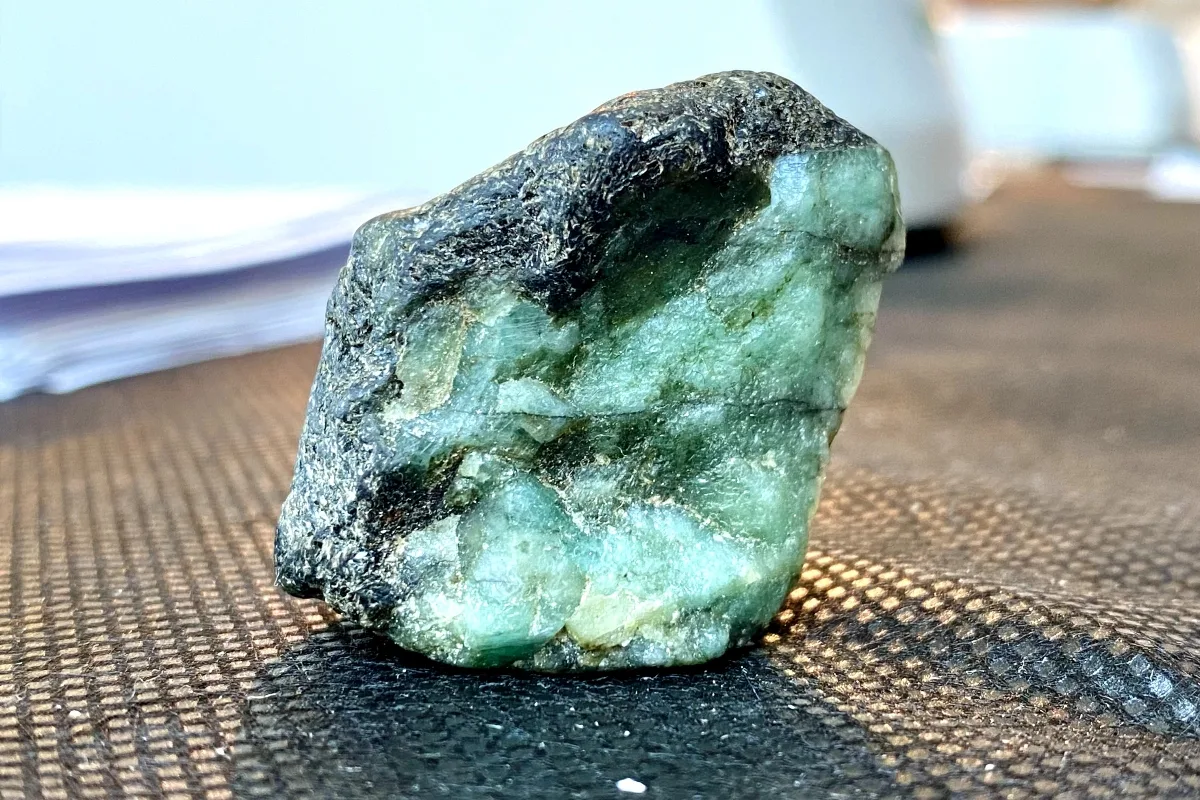

Is emerald technically a beryl?
Yes. Emerald is simply the green, chromium- and/or vanadium-colored variety of the mineral beryl — the same base mineral as aquamarine (blue), morganite (pink), and heliodor (yellow).
How can I tell if my emerald is real at home?
Check for natural inclusions under a loupe, an uneven (not shell-like) fracture, and a cold feel to the touch. None of these are conclusive on their own — for anything of real value, get it independently tested by a gemologist.
Why is emerald so expensive compared to other beryl varieties?
Because gem-quality emerald requires two rare geological ingredients — beryllium-rich rock and chromium/vanadium-rich rock — to occur in direct contact with each other. That combination is far scarcer than the conditions needed to form other beryl varieties, which is what makes fine emerald so much more valuable than aquamarine or morganite of similar size.
Where’s the best place to find emerald in the US?
North Carolina, home to fee-dig mines like Emerald Hollow Mine and Elijah Mountain Gem Mine, is by far the most productive and accessible U.S. state for finding emerald yourself.
| Research Behind This Guide |
|---|
This guide was compiled and edited by the How to Find Rocks team. It consolidates, fact-checks, and builds on original research and field reporting first published on this site by the following subject-matter expert: Olena Rybnikova — Ph.D. candidate in Mineralogy and GIA Applied Jewelry Professional, with published research on the peer-reviewed portal Scopus. See all articles by Olena → |